
Tips to Aid Injury Prevention When Squatting
The squat is often hailed as the king of all exercises, and for good reason. It’s a fundamental movement that builds lower body strength, core power, and overall athleticism. However, like any powerful tool, it needs to be handled with care. Poor technique or a lack of preparation can turn this beneficial exercise into a recipe for injury. Based on my experience and research, here are my top tips to help you squat safely and effectively for years to come.
1. Master Your Form Before Adding Weight
The most crucial step in injury prevention is nailing your technique. Before you even think about loading up a barbell, you should be able to perform a perfect bodyweight squat. This builds the neuromuscular patterns needed for a safe lift.
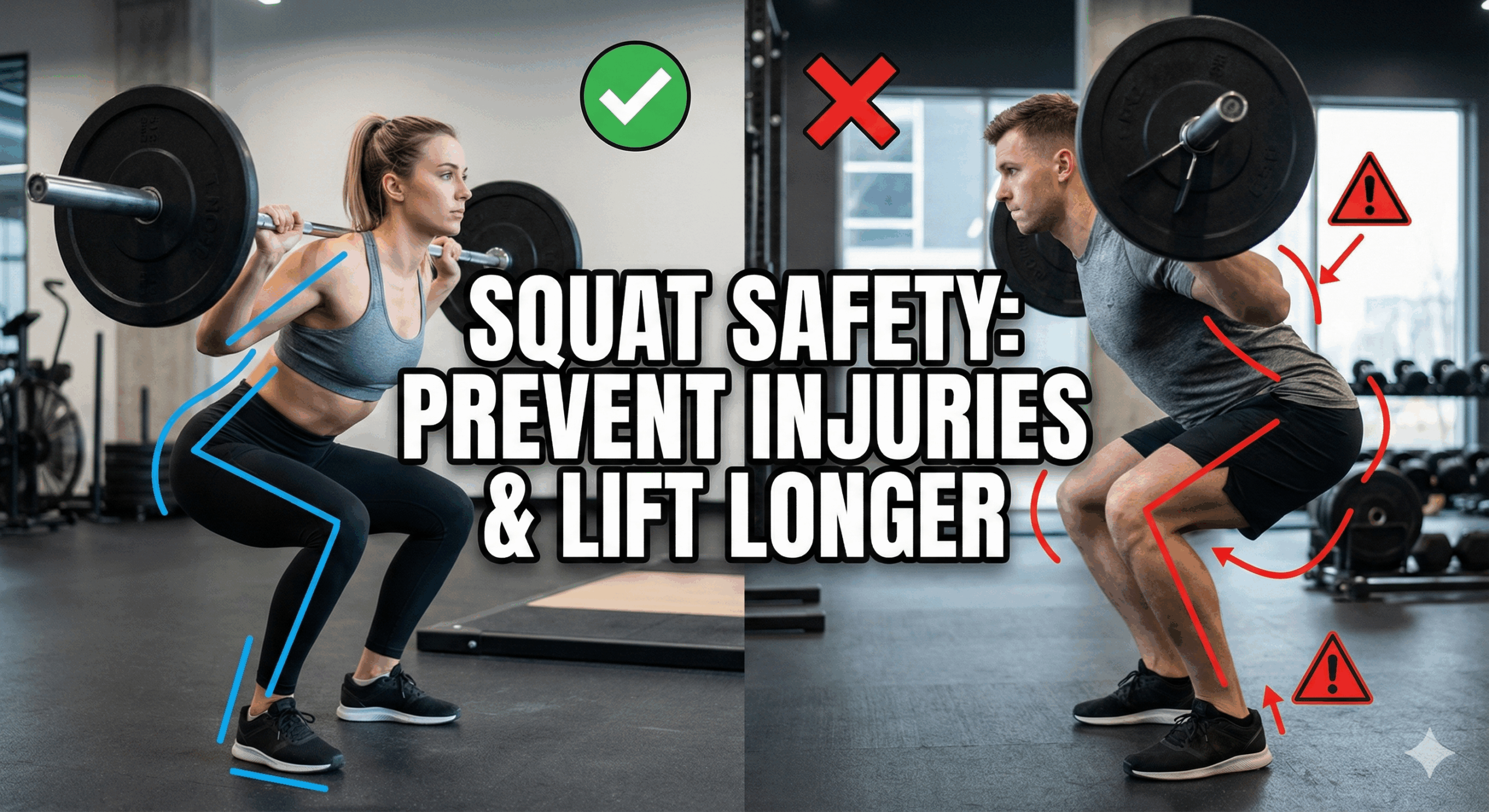
- Neutral Spine: Keep your back straight, from your neck to your lower back. Avoid rounding or excessively arching.
- Chest Up: Maintain a proud chest throughout the movement to prevent your upper body from collapsing forward.
- Hips Back: Initiate the movement by hinging at your hips, as if you’re sitting back into an invisible chair.
- Knees Track Toes: Your knees should move in line with your feet. Avoid letting them cave inward (valgus collapse).
- Heels Down: Keep your whole foot, especially your heels, firmly planted on the floor.
2. Don’t Skip the Warm-Up
Walking into the gym and heading straight to the squat rack is a common mistake. A proper warm-up prepares your muscles, joints, and nervous system for the work ahead. Spend 5-10 minutes doing some light cardio to increase blood flow, followed by dynamic stretches that target your hips, ankles, and thoracic spine.
3. Prioritize Progressive Overload
It’s tempting to try and lift heavy right away, but your body’s connective tissues (tendons and ligaments) need time to adapt. Follow the principle of progressive overload by gradually increasing the weight, reps, or sets over time. This slow and steady approach allows your body to build strength safely and reduces the risk of overuse injuries.
4. Mind Your Mobility
Limited mobility in key areas like your ankles, hips, and upper back can force your body into poor positions during a squat. For example, poor ankle mobility often leads to heels lifting off the floor, which shifts the load forward and puts extra stress on your knees. Incorporate regular mobility drills into your routine to address any restrictions you may have.
5. Listen to Your Body
There’s a big difference between the discomfort of muscle fatigue and the sharp pain of an injury. Learn to distinguish between the two. If you feel any sharp, pinching, or persistent pain, stop immediately. Pushing through pain is a surefire way to turn a minor tweak into a major setback. Don’t hesitate to seek advice from a qualified coach or physiotherapist if you’re unsure.
Conclusion
Squatting is an incredibly rewarding exercise that should be a staple in most training programs. By prioritizing proper form, warming up adequately, and being patient with your progress, you can reap all the benefits while significantly reducing your risk of injury. Remember, longevity in lifting is about consistency, not just intensity. Train smart, stay safe, and keep squatting!

3 comments
Neque porro quisquam est, qui dolorem ipsum quia dolor sit amet, consectetur, adipisci velit, sed quia non numquam eius modi tempora incidunt ut labore.
Quis autem vel eum iure reprehenderit qui in ea voluptate velit esse quam nihil.
Et harum quidem rerum facilis est et expedita distinctio. Nam libero tempore, cum soluta nobis est eligendi optio cumque nihil impedit quo minus id quod maxime placeat facere.
Comments are closed.